> Society > Traditional life


UNESCO defines heritage as the cultural, historical, and social legacy passed down through the generations. This heritage is tangible — such as historical buildings, monuments, artifacts, and the places associated with them — and intangible such as cultural and traditional knowledge-based practices; expressions in the form of language, music, stories, and motifs; and designs reflected as symbols in handlooms and handicrafts; as well as people’s cultural and traditional knowledge and skills.
Heritage is a significant aspect that connects us to our past, shapes our identity, forms community bonds, and enriches cultural diversity, while reviving our values and ethics — specifically the values of coexistence and mutualism. Guided by this insight, Aaranyak organized the Kajir Ronghangpi Heritage Fair from March 7th to 10th, 2026, in the Kaziranga Karbi-Anglong Landscape (KKL), in collaboration with local organizations like the Karbi Cultural Society, Kaziranga Sahitya Sobha, Kohora River Protection Committee, Kaziranga Hotel and Restaurant Association, Pirbi, Aghon, and Tribal Treat. Other non-profit conservation organizations also collaborated, including WWF, the Corbett Foundation, Self-Help Groups, the Assam Pollution Control Board, the Assam Science Technology and Environment Council, the Assam Energy Development Agency, Nandini Energy, Adree Energy, and local communities of the landscape.
The core objectives of the fair were showcasing the tangible and intangible heritage practices of different indigenous people living in the KKL to tourists visiting Kaziranga National Park, developing harmony among the communities, and bringing the norms, values, and ethics of conservation, coexistence, and mutualism to a public forum to develop new discourses on conservation. Additionally, it aimed to create a space for local artisans and farmers to gain experience showcasing and marketing their products while establishing market linkages.
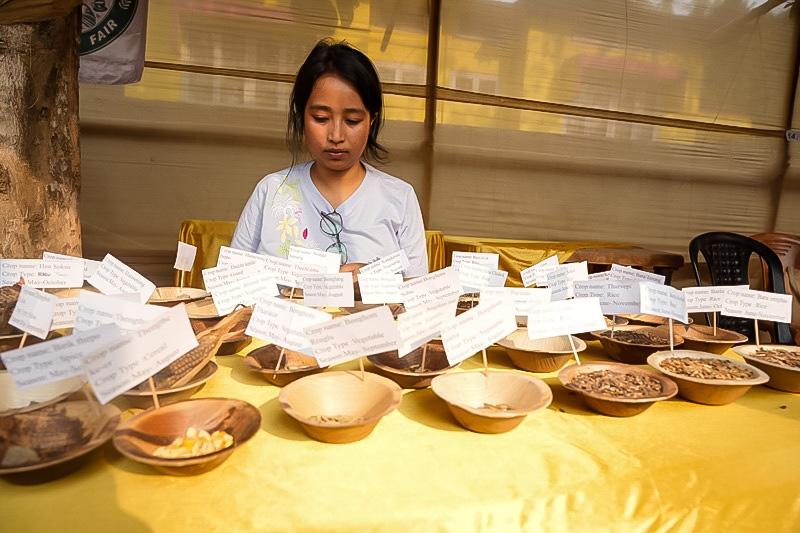
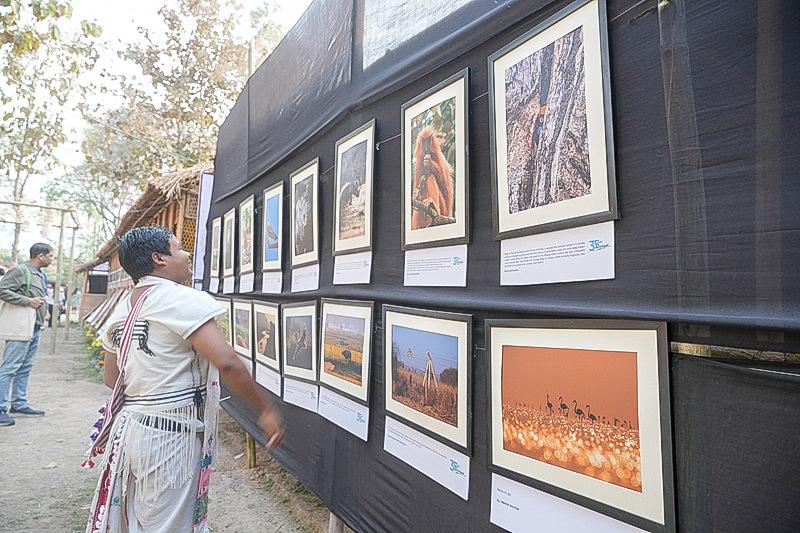
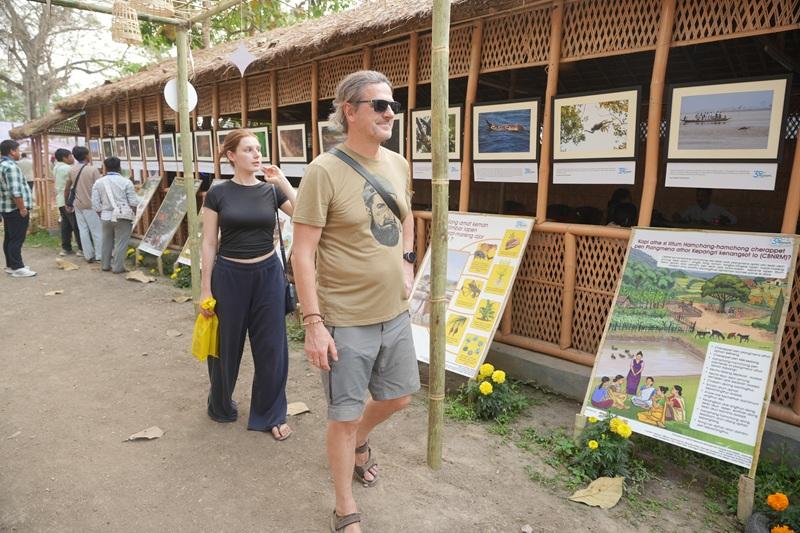
The four-day programme consisted of a language forum, traditional sports activities, the showcasing of traditional handlooms and handicrafts, live demonstrations and learning activities on bamboo craft and weaving, traditional jewellery making, experiencing ethnic food, traditional performing arts of the community, wildlife photography exhibitions, a nature conservation poster exhibition, a buyer-seller meet, an artisan dialogue, and green skill development training along with discussions on waste management and the application of renewable energy. Participating women from different communities inaugurated the fair.
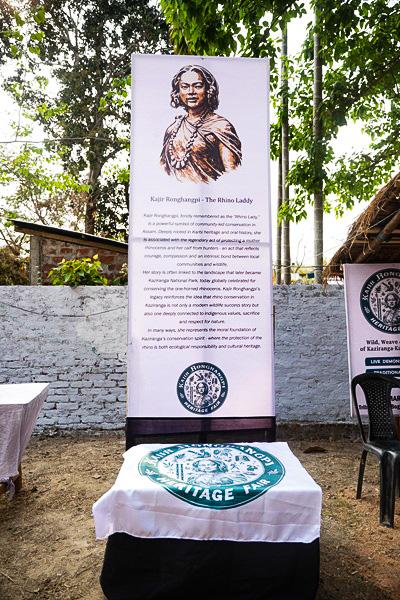
Kajir Ronghangpi, the legendary Karbi lady, is considered by the Karbi people as the poignant symbol of their heritage and their connection to the globally renowned Kaziranga and the one-horned rhino, according to their oral history. The story is still alive in the oral traditions of the people, who say that Kajir Ronghangpi brought the rhino to Earth from heaven with her; therefore, the Karbi community considers her a goddess and the rhino a symbol of wealth and well-being.
Similarly, the Mising community, living mostly in the riverine areas of Kaziranga, also respects this wildlife and coexists with floods and animals. There are other communities in the landscape, like the tea tribes, the Ahom, the Nepali, and other groups speaking Assamese and Bengali, who are always alert during the monsoon. When inundation takes place in Kaziranga National Park and animals leave the park, everyone consciously tries to save the animals and help the park authority with rescues. The inaugural discussion of the fair echoed these thoughts and the experiences shared by leading citizens of the KKL representing different communities.
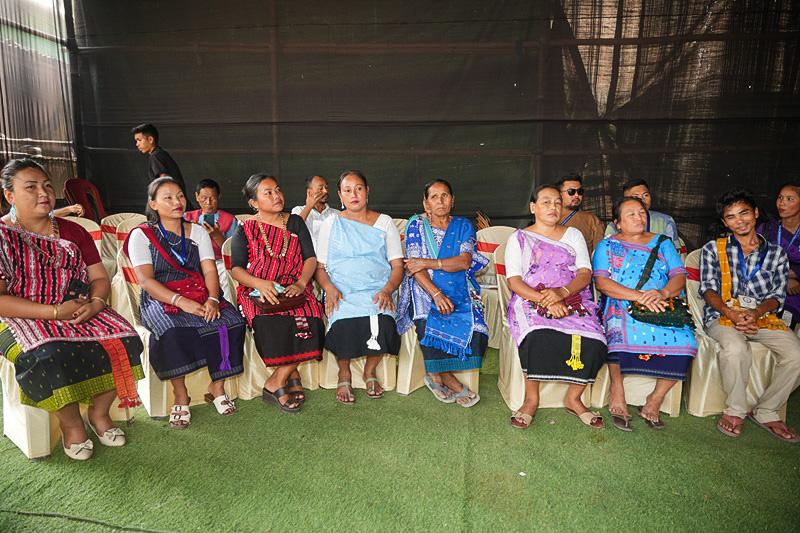
In the language forum, local communities shared the uniqueness and intricacy of their languages, namely Assamese, Karbi, Mising, the dialect of the tea tribe, Nepali, and Bengali. The forum began with participants sharing the names of plants and animals they observed in their own languages, along with associated beliefs and stories. It concluded with expressions of how they feel about the natural landscape where they live. This was shared in Assamese as Monomoha, in the tea tribe dialect as Mon khan sui jai, in Nepali as Pukili/Mayalo, and in Karbi as Ning ingsam. However, every word carries a distinct, deep meaning. Monomoha refers to something that enthralls the mind with its beauty; Mon khan sui jai means heart-touching beauty; Pukili/Mayalo signifies fetching the heart with a deep feeling of love; and Ning ingsam represents a beauty that brings peace to the mind and soul.
Thus, the different expressions used by the communities reflect their emotional connection to the natural landscapes and the values embedded in their language. Consequently, biodiversity, cultural diversity, and linguistic diversity are always associated and interdependent; they must be nurtured and protected.
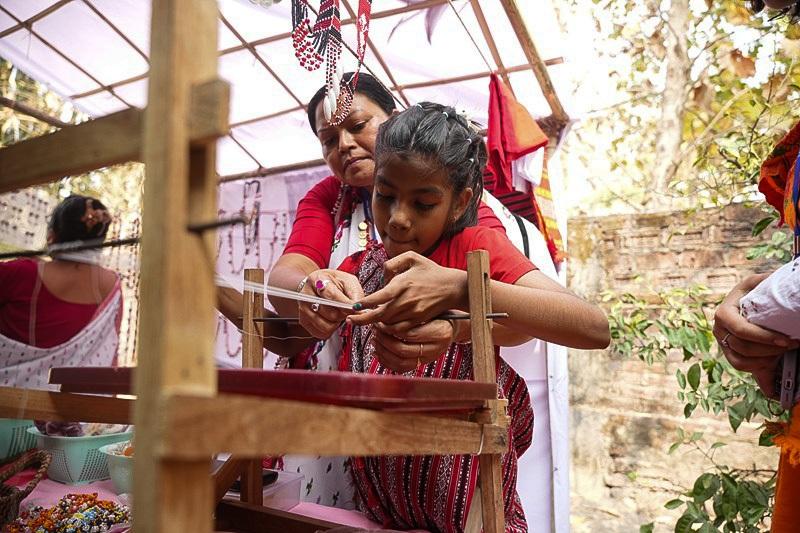
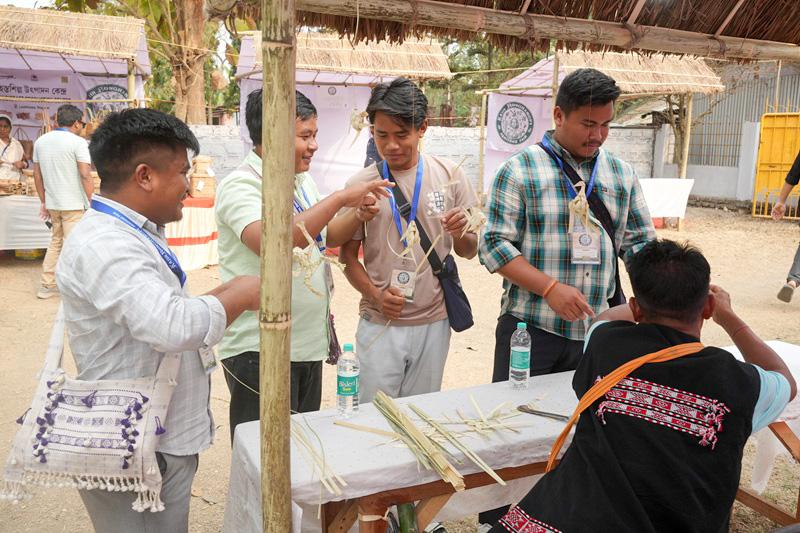
The participatory learning activities for bamboo craft, weaving, and jewellery making instilled in the participants the idea of creativity, design thinking, and the endurance associated with the craft.
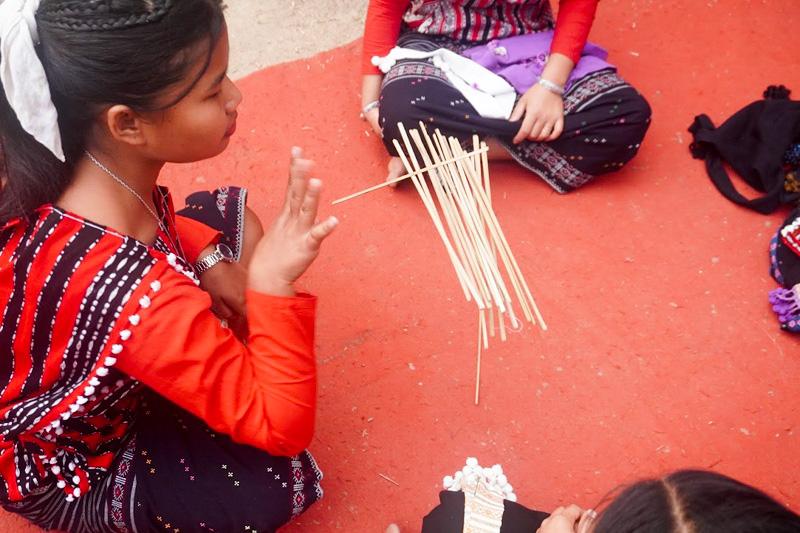
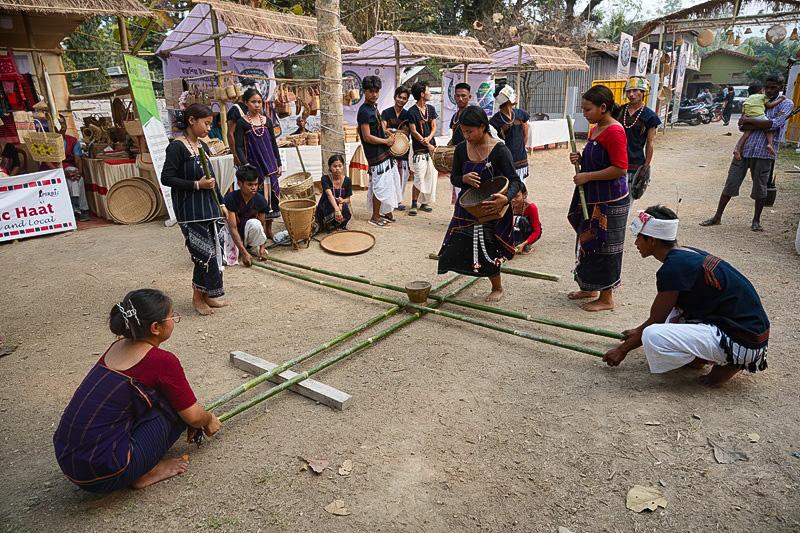
Traditional games like sekserek enhance skills in group activities, the skillful use of hands and fingers, and practice in counting individual items and pairs, including mathematical ideas of using indices and sets.
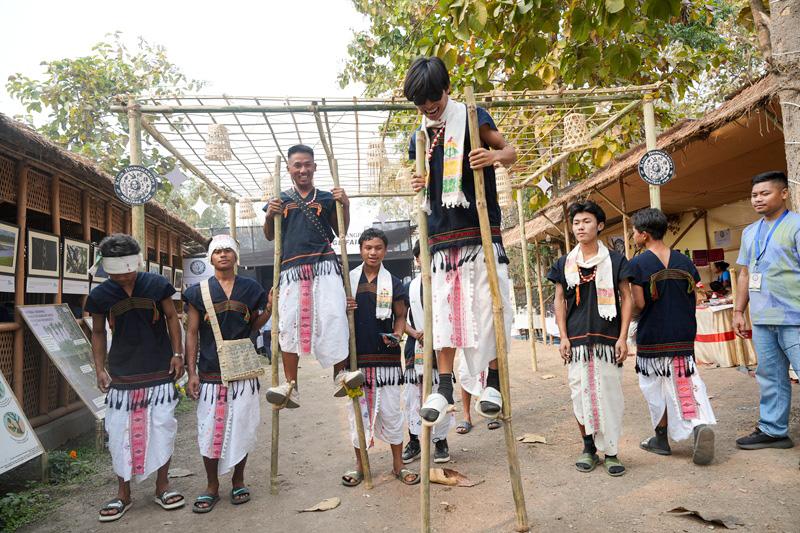
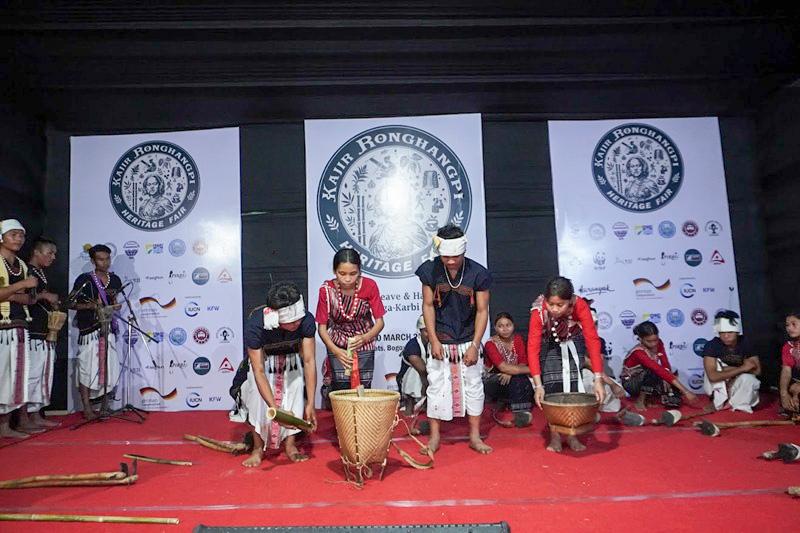
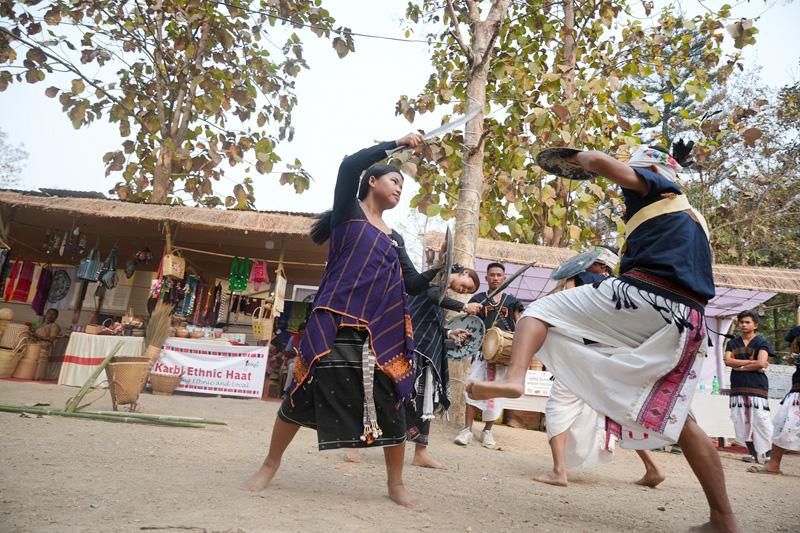
Similarly, the game of kengdongdeng kedam is a physical exercise using a pair of bamboo poles, which can also help participants learn about the impact of the center of gravity in maintaining body balance. The cultural performances showcased the Karbi jhum cycle called Ritnong Chingdi, a warrior dance called Chong Kedam, and the Hen-up Ahi Ke en dance depicting bamboo shoot harvesting through choreographed steps along with instrumental music reflecting the tune of different celebrations. The tea tribes' jhumur song, Assamese folk songs, and instrumental compositions showcased different rhythms in everyday life and festivals. This cultural programme held every evening provided a platform for youth from different communities to showcase their cultural skills in the performing arts.
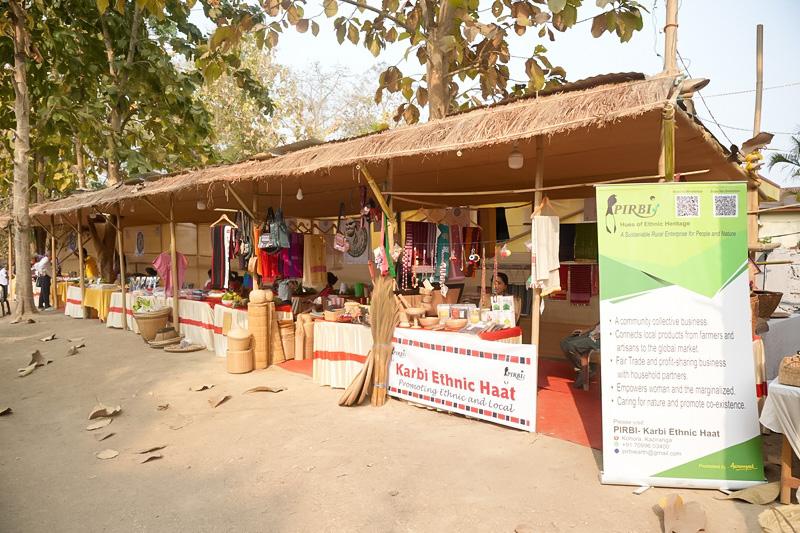
The exhibition and sale of different ethnic products also attracted tourists and other visitors. Around 2.5 lakh rupees were earned by women representing 14 SHGs and 10 artisans over the 4 days. This income benefited around 200 women and 10 men belonging to the Karbi, Mising, and other communities. The majority of them gained this experience for the first time.
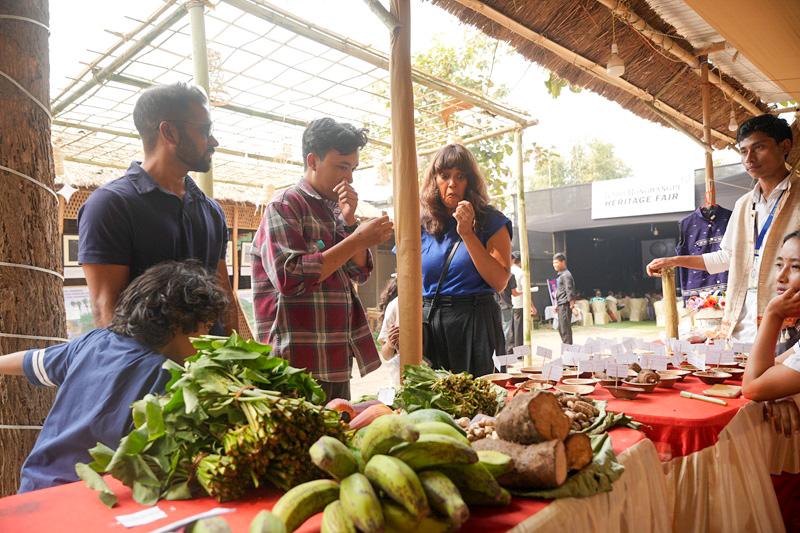
In the buyer-seller meet, around 14 institutional and individual experts participated, sharing technical inputs for product improvement and packaging with the practitioners. The forum concluded with a decision that the group of experts, along with Aaranyak and other organizing partners, will collectively develop a platform for linking community products to the market, particularly for the indigenous people living in forest fringes and riverine areas.
The Kajir Ronghangpi Heritage Fair, for the first time, brought all the communities of the KKL together onto one platform, opened a window of learning from each other, showcased culture and heritage to tourists, created a forum to understand cultural interlinkages with conservation, and provided firsthand experience to rural practitioners and artisans in marketing their products.
It was a significant initiative in the KKL landscape. All the organizers must try to continue it as an annual event to celebrate heritage and culture, learn from each other's traditions, extend the experiences of the cultural landscape to the tourists of Kaziranga, and make a conscious effort to protect indigenous communities and their culture, while bringing marketing opportunities to ethnic practitioners to sell their products based on fair market principles.
 Navigations
  Quick Contact
 Subscribe Us
 Quick Mail